Alone on the Frontier: The Stark Realities Facing Montana's Rural Law Enforcement Officers
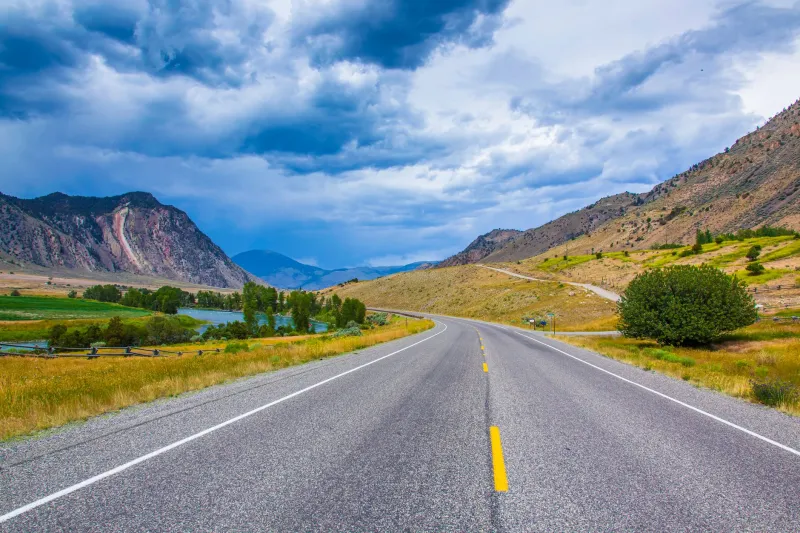
Montana is, by almost every measure, a place that defies easy description. Its 147,000 square miles encompass sprawling prairies, dense wilderness corridors, and mountain ranges that can swallow entire search parties. For the men and women who wear a badge in the state's most remote communities, that geography is not merely a backdrop — it is an ever-present operational variable that shapes every decision they make from the moment they begin a shift.
In counties like Petroleum, Carter, and Treasure — among the least densely populated in the contiguous United States — a single deputy or officer may be the only sworn peace officer on duty across hundreds of square miles. When a call comes in, there is no partner to radio, no patrol car a few blocks over to request as backup. There is only the officer, the road, and whatever situation awaits at the end of it.
The Geography of Responsibility
For residents in urban centers like Billings or Missoula, a police response measured in minutes is a reasonable expectation. In rural Montana, that calculus is fundamentally different. Response times in some remote areas can stretch beyond 45 minutes to an hour, and in winter conditions — when mountain passes ice over and visibility drops to near zero — even that estimate can prove optimistic.
This reality demands a different kind of officer. Rural law enforcement personnel in Montana frequently describe their work as requiring a broader skill set than metropolitan policing. On a single shift, a rural officer might respond to a domestic disturbance, investigate livestock theft, assist a stranded motorist in subzero temperatures, and manage a medical emergency before any emergency medical services arrive. The expectation of specialization that defines larger departments simply does not exist here.
"You are the first responder in every sense of the phrase," one veteran sheriff's deputy from eastern Montana explained. "There's no one else coming for a long time. You have to be prepared to handle whatever is in front of you with the resources you have on your belt and in your vehicle."
Training for the Worst-Case Scenario
Recognizing the unique demands of remote patrol, some Montana law enforcement agencies have worked to tailor their training protocols accordingly. Officers assigned to rural posts are increasingly encouraged — and in some agencies required — to pursue certifications in emergency medical response, wilderness survival, and crisis negotiation, competencies that supplement standard law enforcement academy training.
Tactically, rural officers are also trained to approach high-risk situations with a fundamentally different posture than their urban counterparts. When backup is a theoretical concept rather than a practical certainty, the emphasis shifts heavily toward de-escalation, scene assessment, and containment over immediate confrontation. Buying time until assistance arrives is often the most tactically sound option available.
Vehicle preparedness also takes on heightened importance. Many rural Montana officers carry medical trauma kits, cold-weather survival gear, recovery equipment for off-road extractions, and extended provisions in their patrol vehicles — supplies that would be considered redundant in a city environment but are considered essential here.
The Psychological Weight of Working Alone
Beyond the tactical and logistical challenges, the psychological dimensions of sustained isolation deserve serious attention. Research on law enforcement mental health has historically focused on the trauma exposure and high-intensity stress associated with urban policing. The quieter, more insidious toll of prolonged solitude and chronic low-level threat awareness in rural settings has received comparatively little scrutiny.
Officers who work remote Montana assignments frequently report a persistent state of heightened vigilance — a baseline alertness that does not fully disengage even during off-duty hours. When every call carries the implicit understanding that you are handling it alone, the cognitive load of that awareness accumulates over months and years in ways that are difficult to quantify but deeply felt.
Social isolation compounds the issue. In small communities, the officer is simultaneously a neighbor, a local authority figure, and often one of only a few public employees in town. The professional boundaries that help urban officers maintain psychological separation from their work are harder to sustain when the community they serve is also the community in which they live, shop, and raise their families.
Access to mental health support — already a significant challenge across Montana's law enforcement landscape, as MT Police 365 has previously reported — is further constrained by distance. Telehealth services have improved access to some degree, but cultural resistance to seeking mental health care within law enforcement remains a barrier that geography alone cannot solve.
Recruitment and Retention: A Deepening Crisis
The difficulty of filling and keeping rural law enforcement positions in Montana has reached a level that many county officials now describe as a genuine public safety concern. Competitive salaries in urban and suburban departments, combined with the well-documented hardships of remote posting, make it increasingly difficult for rural agencies to attract qualified candidates — let alone retain them once trained.
Entry-level pay in some of Montana's smallest counties remains significantly below what officers can earn in larger jurisdictions, despite the considerably greater demands placed on rural personnel. Housing shortages in remote communities create an additional practical barrier, as prospective officers may struggle to find suitable accommodations within a reasonable distance of their assigned area.
Agencies that do successfully recruit officers to rural postings often find that retention becomes the next challenge. Younger officers, in particular, may view a rural assignment as a temporary stepping stone rather than a long-term career destination, creating a cycle of turnover that leaves agencies perpetually understaffed and communities chronically underserved.
Some Montana counties have begun experimenting with incentive programs — housing assistance, student loan repayment contributions, and enhanced retirement benefits — to make rural postings more competitive. The effectiveness of these programs varies, and their sustainability depends heavily on county budget conditions that are themselves often strained.
What Communities Can Do
The challenges facing rural law enforcement in Montana are not solely the responsibility of police agencies and county governments to resolve. Community members in remote areas play a meaningful role in the public safety ecosystem, and many rural officers emphasize the importance of that partnership.
Neighborhood communication networks, proactive reporting of suspicious activity, and basic community emergency preparedness can all reduce the burden on officers operating alone across vast distances. In some remote Montana communities, informal arrangements between residents and local law enforcement have developed organically — a recognition that when the nearest badge is an hour away, community cohesion is itself a form of public safety infrastructure.
For state policymakers, the situation presents a clear challenge: ensuring that Montanans in the most remote corners of the state receive a meaningful standard of law enforcement service requires sustained investment in the people willing to provide it. The officers who choose these postings do so with full knowledge of the conditions they will face. The least the system can offer in return is the training, support, and compensation that reflects the weight of what they carry — alone, on the frontier, every shift.