Four Paws Forward: How Montana's K-9 Units Are Filling Critical Gaps in Public Safety
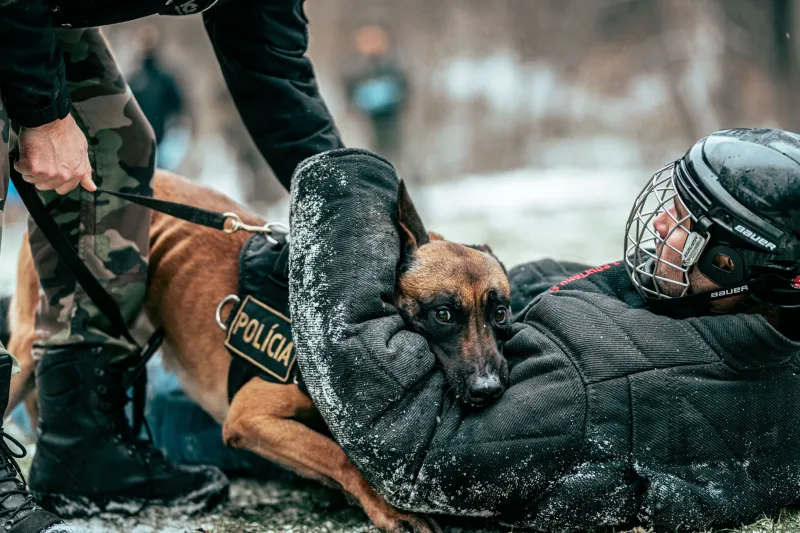
On a cold October morning in Cascade County, a Belgian Malinois named Dax picked up a scent trail that deputies had already spent two hours pursuing on foot. Within twelve minutes, Dax led his handler to a fleeing burglary suspect who had concealed himself in a dense stand of brush nearly a quarter mile from the road. No one was injured. The arrest was clean. And the operation that might have stretched into an hours-long search with multiple officers ended before most residents had finished their morning coffee.
This is the K-9 advantage — not a novelty, not a public relations tool, but a measurable, deployable asset that Montana law enforcement agencies are increasingly treating as essential infrastructure.
More Than a Partner: The Strategic Value of Working Dogs
Montana's geography presents challenges that few other states can match. With over 147,000 square miles of territory — much of it remote, mountainous, and sparsely populated — law enforcement agencies frequently find themselves stretched thin. A single deputy may cover hundreds of square miles on any given shift. In that context, a trained K-9 unit does not merely assist an officer; it functionally replaces what would otherwise require a team.
Working dogs certified in patrol, tracking, and narcotics detection can accomplish tasks that no amount of additional personnel can fully replicate. A dog's olfactory system, estimated to be tens of thousands of times more sensitive than a human's, allows it to locate hidden contraband, track individuals across terrain that defeats visual searches, and detect biological evidence that would otherwise go unnoticed.
For departments already contending with recruitment shortfalls — a challenge well-documented across Montana's law enforcement community — K-9 units represent a practical hedge against understaffing. "When you're running a patrol shift with fewer officers than you need, a K-9 team gives you capabilities you simply cannot replicate with manpower alone," said one western Montana sheriff's department administrator who spoke with MT Police 365 on background.
Training: The Foundation of Every Effective Unit
Deploying a working dog is not a matter of acquiring an animal and sending it into the field. The process is rigorous, expensive, and ongoing. Most Montana departments source their dogs from certified breeding and training programs, with Belgian Malinois and German Shepherds dominating the working-dog landscape due to their drive, trainability, and physical endurance.
Initial certification typically requires hundreds of hours of joint training between the dog and its handler — covering obedience, agility, scent work, apprehension protocols, and scenario-based exercises designed to simulate real deployment conditions. In Montana, departments often coordinate with the Montana Law Enforcement Academy or partner with out-of-state vendors to ensure their handlers meet national certification standards.
Critically, training does not end at certification. Effective K-9 teams maintain regular weekly training schedules throughout the dog's working life, which typically spans six to nine years. Handlers describe the relationship as one of continuous calibration — learning to read the dog's signals, maintaining sharpness in detection work, and adapting to new types of narcotics or evolving suspect behavior.
"The dog is always learning, and so am I," said one handler with a mid-sized Montana municipal department. "The moment you stop training together, you start losing the edge that makes the team work."
Narcotics Detection in a Changing Drug Environment
Perhaps nowhere is the K-9 contribution more visible — and more urgently needed — than in drug interdiction. Montana has not been spared from the national fentanyl crisis. Officers across the state have encountered the synthetic opioid in quantities ranging from small personal-use amounts to significant trafficking volumes, often concealed in ways designed to defeat a cursory search.
Trained narcotics detection dogs have become a frontline tool in identifying fentanyl, methamphetamine, heroin, and other controlled substances during traffic stops, building searches, and border interdiction operations. Because these dogs are trained to alert on odor rather than visual indicators, they can locate drugs hidden within vehicle panels, inside luggage, or buried beneath other materials in ways that human officers — even experienced ones — cannot reliably detect without cause to conduct a more invasive search.
Legal considerations are also relevant here. A certified K-9 alert can establish probable cause for a more thorough search, providing officers with a legally defensible basis for action that protects both the investigation and the department from subsequent challenges in court.
Community Presence and Public Trust
Beyond operational effectiveness, K-9 units serve a function that is harder to quantify but no less important: they build community relationships. Demonstrations at schools, county fairs, and community events give residents — particularly children — a positive, accessible point of contact with local law enforcement.
In rural Montana communities where interactions with law enforcement can be infrequent and sometimes fraught, a K-9 demonstration creates a shared moment of curiosity and engagement. Handlers frequently describe these events as among the most rewarding aspects of their assignment, noting that a working dog draws crowds and conversations that a uniformed officer standing alone rarely generates.
"People want to see the dog work," said one handler from a northeastern Montana county. "And while they're watching, they're also talking to me — about the department, about what we do, about concerns in their neighborhood. It opens doors."
The Costs and the Commitment
Departments considering K-9 programs should enter with clear-eyed awareness of the financial and administrative commitments involved. Acquiring a trained working dog can cost between $8,000 and $20,000 depending on the animal's specialization and the vendor. Handler training, equipment, veterinary care, food, and ongoing certification add several thousand dollars annually per team.
Some Montana departments have turned to grants — including federal Edward Byrne Memorial Justice Assistance Grant funds and state-level public safety allocations — to offset initial acquisition costs. Others have benefited from community fundraising efforts, reflecting genuine local investment in the program's success.
Departments must also account for the handler assignment itself. Most agencies require K-9 handlers to care for their dogs at home, which means the animal lives with the officer's family. This arrangement deepens the bond that makes K-9 teams effective but also places real demands on the handler and their household. Transitions when a dog retires — and the question of adoption or rehoming — require thoughtful departmental policies that acknowledge the emotional dimensions of the partnership.
A Long-Term Investment in Safer Communities
Montana's law enforcement landscape will not become less complex in the years ahead. Drug trafficking routes continue to evolve. Population growth in certain corridors is expanding the workload for departments that have not seen proportional staffing increases. And the vast rural expanses of the state will continue to demand creative solutions to coverage challenges that more densely populated states simply do not face.
In that environment, the case for K-9 units is not merely sentimental — it is strategic. Departments that have built sustainable programs report consistent operational returns: faster apprehensions, stronger narcotics cases, expanded search capabilities, and officers who feel better equipped to handle calls that once required backup that wasn't available.
For the residents of Montana, the presence of a well-trained K-9 team in their community represents something tangible: a department that is investing in tools that work, partnerships that endure, and a commitment to public safety that goes beyond the limits of any single officer's capabilities.
Dax, for his part, was back on duty the following morning.