Reading the Room: How Montana Officers Are Learning to Defuse Danger Before It Erupts
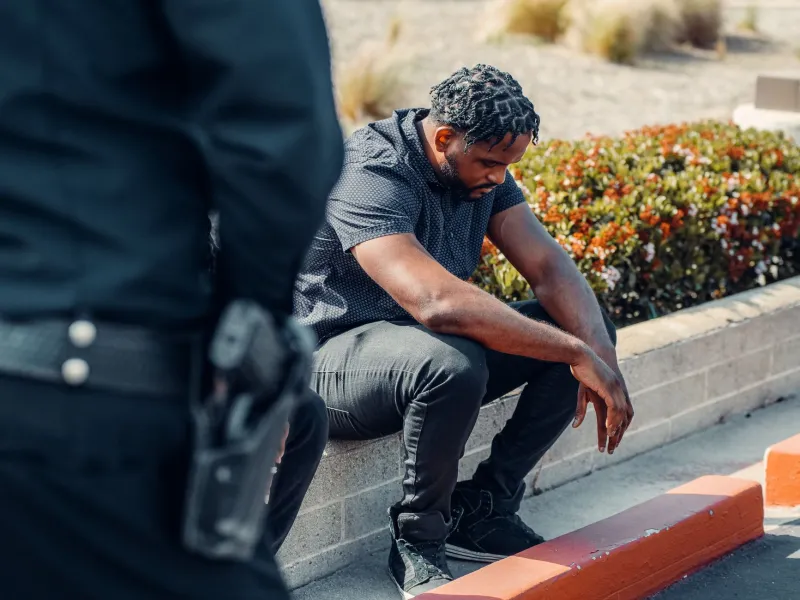
The moment can arrive without warning. A routine welfare check escalates. A traffic stop turns tense. A domestic disturbance call reaches the boiling point before an officer has fully stepped through the door. In those compressed, uncertain seconds, what an officer says — and how they hold their body while saying it — may matter more than anything else on their belt.
Across Montana, a growing number of law enforcement agencies are formalizing what many experienced officers have long understood intuitively: the most effective intervention in a dangerous situation is the one that prevents the situation from becoming dangerous in the first place. Through structured de-escalation and behavioral awareness training, departments are equipping officers with tools designed to interrupt the path toward violence before physical contact ever becomes necessary.
The Science Behind the Silence
De-escalation is not a new concept in policing, but the science undergirding it has advanced considerably in recent years. Researchers in behavioral psychology have documented how the human nervous system responds to perceived threat — and how specific verbal and nonverbal cues from an authority figure can either accelerate or interrupt that stress response in a subject.
Training coordinators working with Montana departments describe a framework built around what they call "pre-contact awareness" — the practice of assessing a person's physical state before any verbal exchange begins. Crossed arms, shallow breathing, a rigid jaw, rapid blinking, or a lowered center of gravity can all signal elevated anxiety or aggression. Officers trained in these methods are taught to catalog these signals almost automatically, adjusting their approach before a single word is spoken.
"What we're really doing is teaching officers to slow down their own nervous system so they can read someone else's," explained one regional law enforcement trainer who works with multiple Montana departments. "When an officer walks in calm, grounded, and deliberate, it changes the physiological dynamic in the room. The other person's system begins to mirror that. It's not a guarantee, but it shifts the odds."
From Classroom to Patrol
The Billings Police Department, the Missoula Police Department, and several smaller agencies across the state have incorporated expanded de-escalation curricula into both recruit academies and continuing education requirements for veteran officers. Some programs draw from nationally recognized models, including those developed in partnership with the Police Executive Research Forum and Crisis Intervention Team training protocols originally designed for encounters with individuals experiencing mental health crises.
But Montana's training coordinators have worked to adapt those frameworks to the specific realities of policing in a largely rural state — where backup may be thirty minutes away, where residents have a long-standing cultural expectation of autonomy, and where the officer standing in someone's doorway may be the only law enforcement presence for miles.
"You can't always wait for a supervisor or a negotiator," said one patrol officer currently serving in a central Montana county. "You are the negotiator. You're also the backup, and sometimes you're the paramedic. The de-escalation training gave me a structure I could actually use alone."
That officer described a call involving a man in a rural property dispute who had armed himself and refused to speak with arriving deputies. Rather than establishing an adversarial perimeter immediately, the responding officer used open-body positioning, maintained a non-threatening distance, and employed a technique known as "motivational listening" — asking questions designed to invite the subject to articulate his grievance rather than defend against a perceived threat. The situation resolved without force.
What the Hands and Eyes Are Saying
Body language instruction has become a core pillar of these programs. Officers are trained not only to read subjects but to manage their own physical presentation with precision. Direct, unbroken eye contact — while natural for an authority figure asserting control — can register as a dominance challenge to someone already in a heightened state. Trainers teach officers to use "soft eye contact," maintaining engagement without projecting confrontation.
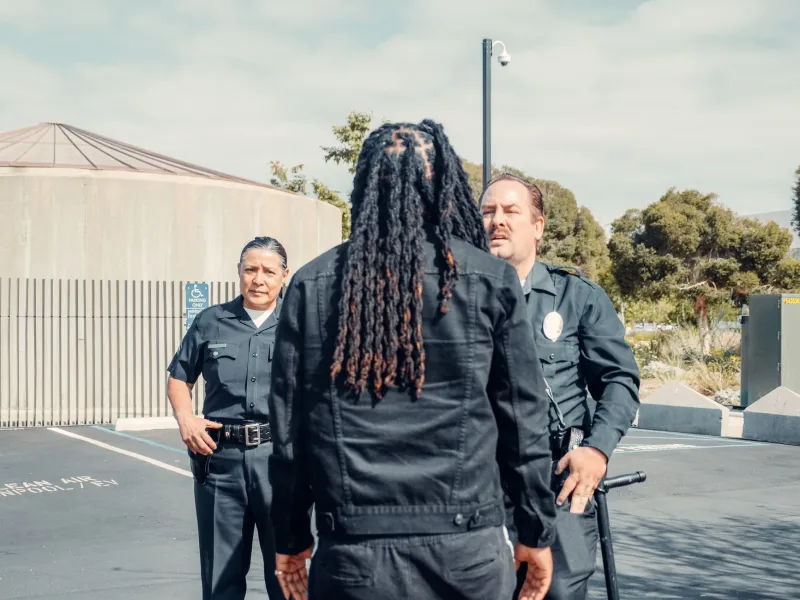
Handplacement matters as well. Officers who keep their hands visible and relaxed — rather than resting them near their duty belt — communicate a posture of engagement rather than readiness for force. Instructors describe this as "open gating," a term borrowed from conflict resolution research.
Voice modulation receives equal attention. The pace, pitch, and volume of an officer's speech can either mirror a subject's agitation back at them or gradually pull that person's emotional register downward. Trainers refer to this as "vocal pacing and leading" — matching a subject's energy initially, then deliberately slowing and softening speech to guide the interaction toward a calmer register.
"People think de-escalation means being passive or giving ground," said one training instructor with more than two decades in Montana law enforcement. "It's actually the opposite. It requires tremendous discipline and presence. You're actively shaping the environment. That takes more skill than almost anything else we train."
Outcomes and Accountability
Measuring the impact of de-escalation training is an imprecise science, partly because the most successful outcomes — incidents that do not happen — leave no report. Departments tracking use-of-force data over multi-year periods, however, have noted meaningful correlations between expanded training and reduced incident rates.
The Montana Department of Justice has encouraged agencies to submit use-of-force data as part of broader public safety accountability efforts, and advocates for law enforcement reform have pointed to de-escalation investment as one of the more promising policy levers available to departments facing scrutiny over officer-involved incidents.
Not every encounter is amenable to de-escalation, and experienced officers are careful to make that distinction. Certain threat profiles — armed subjects in active crisis, individuals under the influence of stimulants with dissociative effects — may not respond to the same verbal and behavioral strategies. Training programs address this directly, teaching officers to continuously reassess a situation's threat level and recognize when de-escalation has reached its limit.
"This is never about taking a tool off the table," said a department training coordinator. "It's about making sure officers have more tools to work with before they reach for the last one."
A Shift in Professional Culture
Perhaps the most significant change being reported by officers who have completed advanced de-escalation programs is not tactical — it is psychological. Officers describe a shift in how they approach calls, from a posture of anticipating conflict to one of actively managing the emotional environment of an encounter.
That shift, trainers argue, has implications not only for public safety outcomes but for officer wellness. Encounters that do not escalate to physical confrontation carry less psychological residue. Officers who feel equipped to handle volatile situations with skill rather than force report lower levels of post-incident stress.
In a state where law enforcement agencies continue to grapple with recruitment challenges, retention pressures, and the cumulative toll of high-stress work, that dimension of de-escalation training may prove as valuable as any other. Teaching officers to read the room, trainers say, ultimately helps them survive it — in every sense of the word.