After the Sun Sets: How Darkness Reshapes Crime, Coverage, and Command Decisions Across Montana

For most Montanans, the hours between midnight and dawn represent little more than deep sleep and quiet streets. For the men and women patrolling those same streets in uniform, those hours often tell an entirely different story — one written in dispatch logs, use-of-force reports, and the exhausted silence between radio calls.
Across Montana's major population centers and sprawling rural counties, a consistent pattern has emerged from years of accumulated incident data: crime does not distribute itself evenly across a 24-hour cycle, and neither do the law enforcement resources deployed to address it. Understanding that gap — and what it costs communities — has become one of the more pressing operational questions facing department commanders throughout the state.
When the Numbers Shift
Publicly available incident data from departments including Billings, Missoula, Great Falls, and Bozeman consistently shows elevated call volumes for certain offense categories during late-night and early-morning hours. Assaults, domestic disturbances, DUI stops, and property crimes tied to alcohol-adjacent environments cluster disproportionately between 10 p.m. and 3 a.m. on weekends, with mid-week overnight hours generating their own distinct patterns in residential areas.
In Billings, Montana's largest city, police department records have historically reflected a surge in disturbance-related calls during the overnight window — a pattern department leadership has acknowledged when discussing shift deployment strategies publicly. Missoula, home to the University of Montana, contends with its own temporal rhythms tied to the academic calendar, where certain crime categories spike during evening hours in neighborhoods adjacent to campus entertainment corridors.
Rural counties present a fundamentally different analytical challenge. In places like Petroleum County, where a single sheriff's deputy may cover thousands of square miles on a given overnight shift, the concept of "coverage" takes on a meaning that urban policing models simply cannot address. There are no backup units a few blocks away. Response times measured in minutes in Billings can stretch to 45 minutes or longer in Montana's more remote jurisdictions — and that calculation worsens considerably after dark, when road conditions and visibility compound every other variable.
The Staffing Equation After Midnight
Nearly every law enforcement administrator interviewed for this report identified overnight staffing as among the most persistent operational challenges their agencies face. The reasons are structural as much as budgetary.
"The midnight shift has always been the hardest to fill," said one veteran sergeant with more than two decades on a Montana municipal force, speaking on background. "It's not just the hours — it's the cumulative wear. Officers rotate through overnight assignments, and over time, the physical and psychological toll becomes very real."
Departments across the state have experimented with various scheduling models — four-ten-hour shifts, rotating three-week cycles, and hybrid arrangements — in efforts to balance coverage with officer wellbeing. None has emerged as a universal solution. The fundamental tension remains: the hours when criminal activity tends to concentrate are the same hours when experienced officers are statistically least available, either due to shift rotation, leave, or the simple reality that senior personnel often hold seniority-driven day assignments.
This dynamic places a disproportionate burden on newer officers. In several Montana departments, it is not unusual for officers with fewer than three years of experience to staff the bulk of overnight shifts. The implications for decision-making quality, officer safety, and community outcomes are significant — and largely invisible to the residents those officers serve.
Rural Darkness: A Different Kind of Exposure
If overnight policing in Montana's cities carries elevated risk, the calculus in rural jurisdictions borders on the extraordinary. Montana ranks among the largest states by land area with one of the lowest population densities in the nation, and its law enforcement geography reflects that reality in stark terms.
Sheriff's offices in counties like Garfield, Carter, and McCone routinely operate with skeletal overnight staffing — sometimes a single deputy responsible for an area larger than several Eastern states combined. When those deputies encounter a serious incident after midnight, mutual aid from neighboring jurisdictions can take an hour or more to arrive. State Highway Patrol units, while geographically distributed, cannot be everywhere simultaneously.
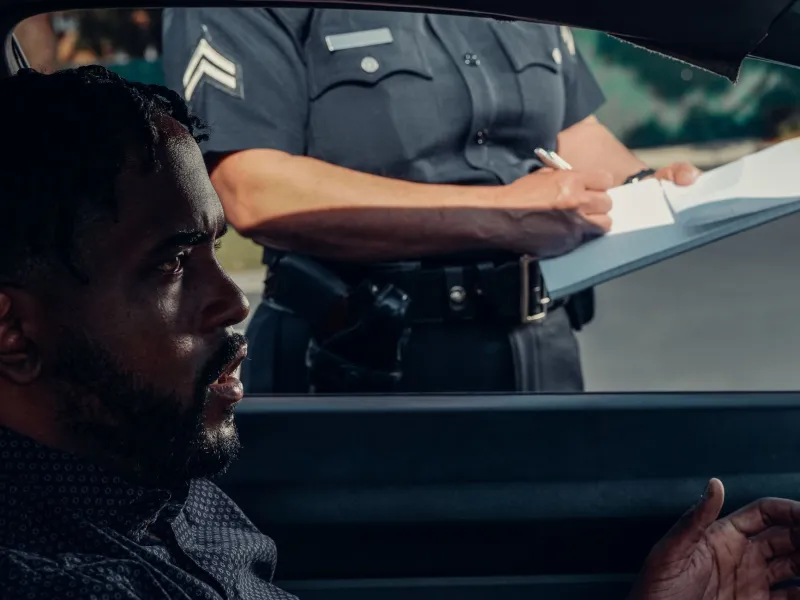
"You make a traffic stop at 1 a.m. on a county road, you're doing it alone," one rural deputy explained during a brief conversation at a regional law enforcement conference earlier this year. "You run the plate, you approach the vehicle, and whatever happens next — that's on you until someone else can get there. Sometimes that's a long time."
This reality has prompted renewed conversations about regional coordination, including cross-county mutual aid agreements and enhanced communication protocols designed to reduce the isolation that overnight rural officers experience. Progress has been incremental.
Technology as a Force Multiplier — With Limits
Some departments have turned to technology to extend their effective coverage during overnight hours. License plate reader systems, strategically positioned surveillance infrastructure, and data-driven deployment models have all been cited as tools that can help smaller agencies do more with constrained overnight staffing.
ShotSpotter-style acoustic detection systems, adopted in a handful of larger Montana municipalities, provide real-time gunshot alerts that can reduce response lag during overnight hours when patrol density is lowest. Predictive analytics platforms — though adopted cautiously and with ongoing debate about civil liberties implications — have helped some departments anticipate where overnight incident clusters are likely to develop based on historical patterns.
Yet technology carries its own limitations in Montana's context. Rural broadband gaps mean that advanced connectivity-dependent systems are simply not viable in many of the counties that face the steepest overnight coverage challenges. And no algorithm eliminates the fundamental problem of officer availability: if there is one deputy on duty, there is one deputy on duty, regardless of how sophisticated the department's analytical tools may be.
What the Data Argues For
Criminologists and public safety researchers who have examined Montana-specific patterns generally arrive at a common set of recommendations: targeted resource deployment during statistically elevated risk windows, investment in officer wellness programs that account for the physiological burden of overnight work, and regional cooperation frameworks that allow rural jurisdictions to pool limited overnight capacity.
Legislative attention to the structural funding gaps that constrain overnight staffing has been uneven. While the Montana Legislature has addressed law enforcement appropriations in recent sessions, advocates for rural sheriffs' offices argue that per-capita funding formulas systematically disadvantage low-density counties — precisely those most dependent on overnight coverage from a handful of officers.
A Pattern Worth Watching
The temporal dimension of crime and policing rarely generates the same public attention as high-profile incidents or departmental controversies. But for the officers who navigate Montana's roads and communities between midnight and sunrise, it is the defining reality of their professional lives — and a persistent variable in the public safety equation that affects every resident in the state, whether they are aware of it or not.
As Montana's communities grow, as drug-related crime continues to reshape call volume patterns, and as recruitment challenges leave overnight shifts chronically understaffed, the hours after dark will remain among the most consequential — and least examined — dimensions of law enforcement in the state.
MT Police 365 will continue tracking incident data and departmental staffing trends as part of our ongoing commitment to public safety transparency across Montana.