Unexpected Sentinels: How Trail Cameras Are Becoming Law Enforcement's Eyes in Montana's Backcountry
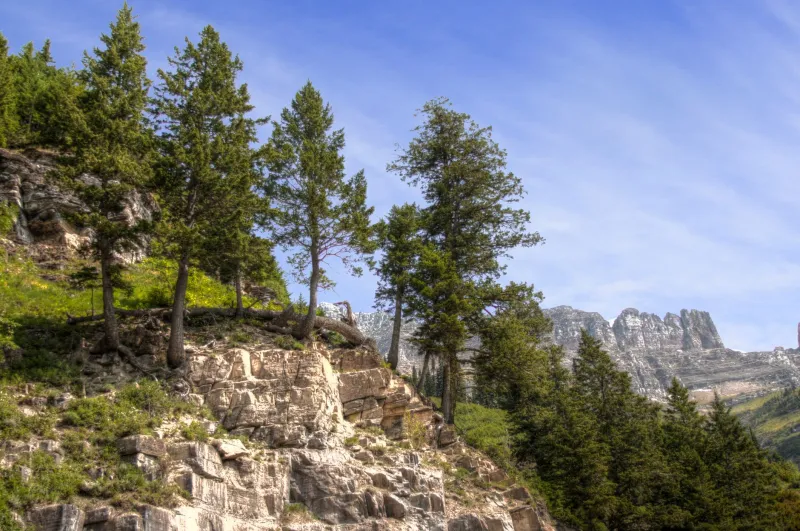
Montana covers more than 147,000 square miles, and a significant portion of that land lies well beyond the reach of routine law enforcement patrols. Dirt roads that vanish into mountain passes, river corridors accessible only by foot, and ranches stretching across dozens of square miles present a persistent challenge for deputies and investigators trying to document criminal activity in real time. Yet across this same terrain, a quiet surveillance infrastructure has been quietly taking shape — one built not by government agencies, but by hunters, ranchers, wildlife biologists, and conservation organizations.
Trail cameras, originally designed to monitor game movement and assist with wildlife management, have proliferated across Montana's public and private lands at a remarkable pace. Industry estimates suggest that millions of these motion-activated devices are currently deployed across the American West, with Montana representing one of the heaviest concentrations due to its robust hunting culture and extensive ranchlands. What began as a tool for scouting trophy elk has, in a growing number of cases, evolved into an unplanned but consequential component of rural law enforcement.
From Game Scouting to Crime Documentation
The transition from wildlife monitoring to evidence collection has been largely organic. Investigators report that the shift typically begins when a landowner or hunter reviews footage expecting to find images of deer or turkeys, only to discover vehicles, individuals, or activities that raise immediate concern. In some instances, those images have documented crimes already under investigation. In others, they have initiated entirely new inquiries.
Montana Fish, Wildlife & Parks (FWP) wardens have long relied on trail camera footage to pursue poaching cases — one of the more common crimes in remote areas. Game wardens describe scenarios where a single camera positioned near a known elk crossing has captured individuals hunting after legal hours, shooting from vehicles, or taking animals in excess of their legal limits. The footage, time-stamped and often high-resolution, provides the kind of objective documentation that transforms a circumstantial case into a prosecutable one.
County sheriffs' offices have reported similar experiences with property crimes. Rural theft — including the theft of cattle, ATVs, fuel, and farm equipment — has historically been difficult to prosecute due to the absence of witnesses and the remoteness of the locations involved. Trail cameras positioned near outbuildings, water sources, or fence lines have, in documented cases, captured license plates, vehicle descriptions, and even clear images of suspects' faces during the commission of crimes that would otherwise have gone unsolved.
A Voluntary Network With No Central Command
Unlike formal surveillance infrastructure, this network of cameras operates without coordination, centralized management, or government oversight. Each device belongs to a private individual or organization, and law enforcement's access to the footage it captures is governed by the same legal principles that apply to any privately held evidence. Officers typically learn of relevant footage through voluntary disclosure — a landowner who noticed something suspicious and called the local sheriff's office, or a hunter who flagged an image while reviewing a memory card at the end of a season.
This voluntary character is both a strength and a limitation. On one hand, it means the network is vast, constantly expanding, and maintained at no cost to taxpayers. On the other hand, it means investigators have no systematic way to identify which cameras might have captured evidence relevant to a particular case. Detectives working a theft or a poaching investigation in a remote drainage must rely on local knowledge, community relationships, and outreach to determine whether any privately owned cameras were positioned in the relevant area during the relevant timeframe.
Some Montana sheriffs' offices have begun formalizing that outreach. In counties with active hunting communities, investigators have developed informal protocols for contacting local sportsmen's organizations, ranch associations, and hunting outfitters when crimes occur in backcountry settings. The goal is to identify camera owners in the affected area quickly and request voluntary review of their footage before the relevant files are overwritten.
Legal Considerations and the Question of Privacy
The use of privately obtained trail camera footage raises legal questions that Montana prosecutors and defense attorneys continue to navigate. Because the cameras are privately owned and operated, their footage does not implicate the Fourth Amendment concerns that govern government surveillance. Individuals who install cameras on private land generally have broad latitude to capture images of whoever passes through that land, and to share that footage voluntarily with law enforcement.
However, cameras positioned on or near public land — a common scenario given Montana's extensive national forest and Bureau of Land Management holdings — introduce additional complexity. Legal scholars have noted that the expectation of privacy in truly public spaces is limited, but the specific context, camera placement, and nature of the captured activity can all factor into how courts evaluate the admissibility of footage in criminal proceedings.
Prosecutors in Montana have generally found trail camera evidence to be admissible when properly authenticated and accompanied by testimony from the camera's owner regarding its installation, maintenance, and the chain of custody for the retrieved footage. Defense challenges have typically focused on authentication and chain-of-custody questions rather than constitutional grounds.
Conservation Groups as Unintentional Partners
Beyond individual landowners and hunters, conservation organizations operating in Montana have emerged as another source of incidentally captured evidence. Groups conducting wildlife surveys, monitoring predator-prey dynamics, or tracking endangered species routinely deploy camera networks across large swaths of terrain. These cameras are often positioned in areas that also attract illegal activity — remote trailheads used for unauthorized off-road vehicle access, riparian corridors targeted by illegal dumping operations, or wilderness boundaries where poaching pressure tends to concentrate.
Several Montana-based conservation organizations have developed informal agreements with state and federal law enforcement agencies governing how incidentally captured evidence will be handled when their cameras document apparent criminal activity. These arrangements balance the organizations' primary research missions against their interest in supporting legal accountability for wildlife and environmental crimes.
Building Relationships Before the Crime Occurs
Law enforcement officials who have worked with trail camera evidence consistently emphasize one lesson: the most effective use of this resource depends on relationships built before any crime occurs. Investigators who are known and trusted in rural communities are far more likely to receive timely calls from landowners and hunters who have discovered relevant footage. Departments that engage proactively with local sportsmen's groups, attend agricultural meetings, and maintain visibility in remote areas develop the community ties that translate into evidence leads when investigations arise.
For Montana's law enforcement community, this dynamic reinforces a broader principle that has long characterized effective rural policing: in areas where officers cannot be everywhere, the public becomes an essential partner. Trail cameras represent one expression of that partnership — an unplanned technological contribution from Montana's outdoor culture to the ongoing work of maintaining public safety across one of the nation's most expansive and challenging landscapes.
As the devices become more sophisticated, more affordable, and more widely deployed, their role in rural investigations is likely to grow. For investigators working cases in Montana's backcountry, the question is no longer whether trail cameras will produce evidence — it is whether the relationships and protocols exist to surface that evidence before it disappears from a memory card, erased by the passage of time and the next passing elk.