Eyes on Every Corner: How Montana's Growing Camera Networks Are Cracking Cases That Once Went Cold
For years, a smash-and-grab theft at a Billings strip mall or a hit-and-run on a Missoula side street would have left investigators with little more than a witness description and a slim chance of resolution. Today, the calculus is changing. Across Montana, a patchwork of intersection cameras, privately owned parking lot surveillance systems, and municipal CCTV networks is quietly rewriting what's possible in criminal investigations — even in communities that can barely afford a second patrol unit.
The technology isn't new, but its reach and integration into active law enforcement work has accelerated significantly over the past several years. What was once a passive recording tool has become a dynamic investigative resource, one that departments of all sizes are learning to leverage with increasing sophistication.
From Traffic Management to Crime Solving
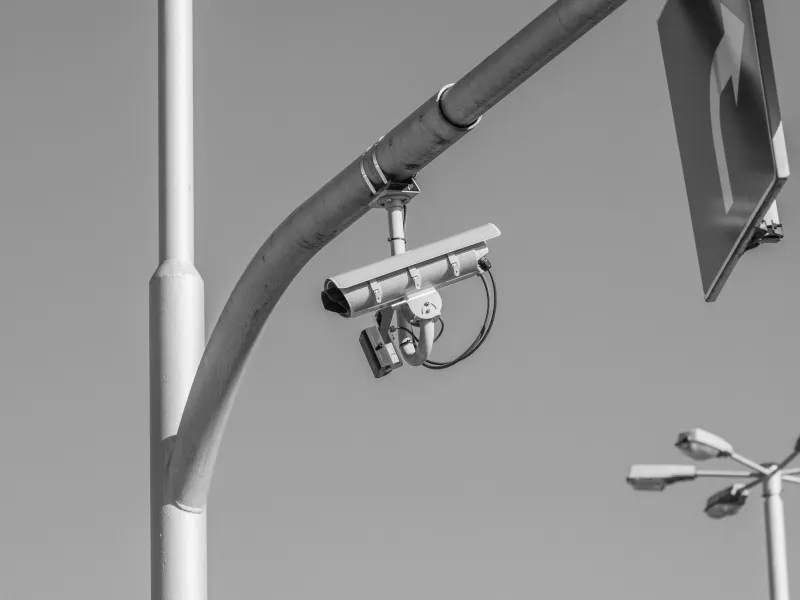
Montana's traffic camera infrastructure was never designed with criminal investigation in mind. Installed primarily to monitor intersection flow, track accident patterns, and support road maintenance decisions, these systems have found a secondary — and increasingly prominent — purpose in law enforcement.
When a hit-and-run leaves a pedestrian injured on a busy corridor, or when a carjacking suspect flees through a downtown grid, investigators now routinely request footage from city traffic management systems. The images captured, even at relatively low resolution, can confirm vehicle make, model, and direction of travel within minutes of an incident — intelligence that previously might have taken days to piece together through witness canvassing alone.
Officers in Great Falls and Bozeman have described the footage as a "starting thread" — not always definitive on its own, but capable of narrowing a field of suspects dramatically. In several documented cases, traffic camera imagery has provided the critical link between a crime scene and a license plate, enabling arrests that investigators say would not have occurred otherwise.
Private Systems, Public Value
Perhaps more significant than the municipal camera infrastructure is the sheer volume of privately owned surveillance equipment operating across Montana's commercial corridors. Gas stations, banks, grocery stores, and retail chains have invested heavily in high-definition camera systems over the past decade. When law enforcement comes knocking — typically with a records request or, in urgent circumstances, a warrant — those recordings often prove more detailed and more useful than anything the public sector has installed.
Detectives working property crime cases have noted that parking lot cameras in particular have become indispensable. Catalytic converter thefts, vehicle break-ins, and retail fraud investigations frequently hinge on footage captured by systems the business owner installed purely for liability purposes, with no anticipation that it would one day serve as evidence in a criminal prosecution.
The relationship between law enforcement and private camera operators has required cultivation. Departments that have invested in community outreach — explaining what footage is useful, how quickly it needs to be preserved before systems overwrite recordings, and what the request process looks like — report significantly better cooperation than those that approach businesses only in the aftermath of an incident.
A Force Multiplier for Understaffed Departments
For Montana's smaller law enforcement agencies, where a single officer may be responsible for patrolling hundreds of square miles, surveillance networks represent something close to an operational lifeline. The ability to review hours of footage without deploying additional personnel means that a department of six officers can effectively extend its investigative reach far beyond what its headcount would otherwise permit.
Sheriff's offices in counties like Cascade and Yellowstone have begun formalizing their approach to camera evidence, designating specific personnel to handle digital evidence requests and establishing protocols for footage preservation and chain-of-custody documentation. The goal is to ensure that what's captured on camera is not only useful at the scene but defensible in a courtroom.
Prosecutors have taken note. Video evidence, when properly obtained and authenticated, carries substantial weight with juries. In assault cases where physical evidence is limited and witness accounts conflict, a clear recording of the incident itself can be the difference between conviction and acquittal.
The Rural Gap: Where Cameras Don't Reach
For all the promise these systems hold, their distribution across Montana reflects a stark geographic reality. Camera coverage — both public and private — clusters in population centers. Drive thirty minutes outside Billings or Missoula, and the surveillance infrastructure thins rapidly. In many of Montana's rural counties, there are simply no cameras to consult.
This gap creates an uneven investigative landscape. A vehicle theft that occurs in downtown Helena may generate footage from a dozen angles. The same crime committed in a small agricultural community may leave investigators with nothing electronic to work from. Rural residents, who already contend with longer law enforcement response times, face a compounding disadvantage when it comes to the resolution of property crimes.
Some departments have explored grant funding to extend camera coverage to rural commercial areas and highway corridors, but the costs of installation, maintenance, and data storage remain significant barriers. Connectivity is another obstacle — reliable broadband access, necessary for remote camera monitoring, remains inconsistent across much of the state.
Balancing Surveillance and Civil Liberties
The expansion of camera networks has not gone unnoticed by civil liberties advocates and privacy-conscious residents. Montana has a long tradition of skepticism toward government surveillance, and the increasing integration of camera footage into law enforcement practice has prompted questions about how that footage is stored, who has access to it, and how long it is retained.
Law enforcement officials who spoke with MT Police 365 emphasized that their use of camera footage is governed by existing legal frameworks — records requests, warrants, and departmental policy — and that the technology does not represent a departure from established investigative norms. "We're not watching people live," one investigator noted. "We're reviewing recordings after a crime has occurred, the same way we'd review any other evidence."
Nevertheless, legal scholars and advocacy groups have called for clearer statutory guidelines governing how long footage can be retained, under what circumstances it can be shared between agencies, and what oversight mechanisms should apply when camera systems are networked across jurisdictions. Those conversations are ongoing at both the state and national level.
What Comes Next
The trajectory of surveillance technology in Montana law enforcement points toward greater integration, not less. Advances in image enhancement software, license plate recognition, and — more controversially — facial recognition capabilities are expanding what investigators can extract from existing footage. Some larger departments are exploring partnerships with regional data-sharing networks that would allow cross-jurisdictional searches of recorded imagery.
Whether Montana communities ultimately embrace or push back on that trajectory will depend in large part on the quality of the public conversation surrounding it. Transparency from law enforcement about how these tools are used, and meaningful engagement with residents about the tradeoffs involved, will shape both the policy environment and public trust.
For now, the cameras that line Montana's intersections and commercial parking lots continue to record — silent, patient, and increasingly central to the work of keeping communities safe.