From Cold Files to Courtrooms: Montana's DNA Revolution Is Rewriting Decades-Old Mysteries
For decades, certain case files in Montana sheriff's offices and police departments gathered dust in metal cabinets—evidence logged, interviews exhausted, leads long dried up. The victims' families waited. Investigators moved on to new cases, carrying the weight of unresolved ones. Then came a quiet revolution in forensic science, and suddenly those cold files began to warm.
Advanced DNA technology, particularly investigative genetic genealogy (IGG), has fundamentally altered the calculus of cold case investigations across Montana. What once required a direct DNA match in a criminal database now requires only a partial genetic profile and access to consumer genealogy platforms—tools that can trace a suspect through distant relatives who voluntarily submitted their own DNA to services like GEDmatch or FamilyTreeDNA.
The Science Behind the Breakthrough
Traditional forensic DNA analysis depends on a direct match between crime scene evidence and a profile already catalogued in CODIS, the FBI's Combined DNA Index System. If the perpetrator was never arrested or never submitted a DNA sample, that match simply never comes.
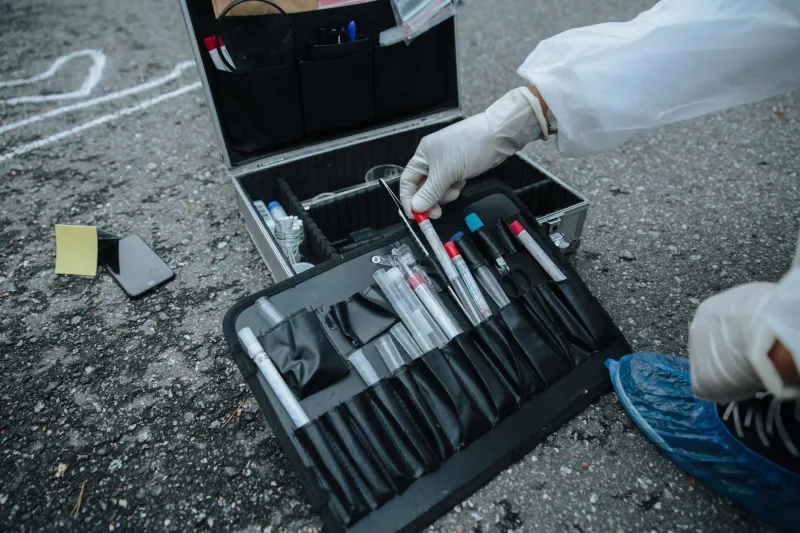
Investigative genetic genealogy sidesteps that limitation. Forensic scientists extract a DNA profile from crime scene evidence and upload it to genealogy databases populated by ordinary citizens pursuing ancestry research. From there, genealogists working alongside law enforcement build family trees—sometimes stretching across hundreds of relatives—to triangulate a suspect's identity through shared genetic markers.
The Montana Department of Justice's Forensic Science Division has expanded its capacity to process this type of complex genetic evidence in recent years, collaborating with specialized private laboratories that focus exclusively on IGG casework. These partnerships have allowed investigators in rural Montana counties—where staffing and resources are perennially limited—to access expertise that would otherwise be out of reach.
"The technology has leveled the playing field in ways we couldn't have imagined twenty years ago," said one veteran investigator with a western Montana sheriff's office who requested anonymity due to an ongoing case. "We had a homicide from the late 1980s. Victim's family never got answers. With genealogy work, we now have a name. We're building the case."
Cases Reopened, Families Notified
While Montana has not yet produced the national headlines that accompanied high-profile IGG cases in other states—such as the identification of California's Golden State Killer in 2018—investigators here have quietly made progress on several long-dormant files.
The Cascade County Sheriff's Office, the Lewis and Clark County Sheriff's Office, and the Missoula Police Department have each reportedly reopened cold case units or assigned dedicated personnel to review unsolved crimes with biological evidence suitable for modern reanalysis. Advances in low-template DNA extraction now allow laboratories to develop genetic profiles from trace evidence that earlier technology could not process—a single touch on a surface, a partial fingerprint, microscopic biological material that older methods would have deemed insufficient.
For families of victims, the news that a decades-old case has been reopened arrives with complicated emotions. Hope, grief, and the fear of renewed disappointment can arrive simultaneously. Victim advocates embedded in several Montana law enforcement agencies have emphasized the importance of managing family expectations carefully as this technology matures.
"We have to be honest with families about what the science can and cannot guarantee," said a victim services coordinator familiar with cold case protocols in Montana. "A DNA lead is not a conviction. It's the beginning of a new investigative chapter."
Ethical Terrain: Who Owns Your Genetic Data?
The power of investigative genetic genealogy does not come without controversy. Civil liberties organizations, privacy scholars, and even some law enforcement ethicists have raised substantive concerns about the practice.
At the core of the debate is consent. When a private citizen submits a DNA sample to a consumer genealogy service to learn about their ancestry, they are almost certainly not consenting to having that data used to identify criminal suspects within their family tree. The genetic information of innocent relatives—who have committed no crime and have no connection to any investigation—becomes a tool of law enforcement scrutiny without their knowledge.
In 2019, the U.S. Department of Justice issued interim guidelines governing federal law enforcement use of genealogy databases, requiring agencies to exhaust traditional investigative means before pursuing IGG and restricting its use to violent crimes and unidentified human remains cases. Montana law enforcement agencies operating under state jurisdiction are encouraged to follow analogous standards, though formal statutory guardrails at the state level remain limited.
Several Montana legislators have expressed interest in establishing clearer legal frameworks. Until that happens, individual departments and county attorneys are largely navigating this terrain on a case-by-case basis, often in consultation with the Montana Department of Justice.
"The tool is extraordinary. The responsibility that comes with it is equally extraordinary," said a legal analyst familiar with Montana criminal procedure. "Getting this right—both legally and ethically—matters as much as getting the conviction."
Training the Next Generation of Cold Case Investigators
Recognizing that IGG is not a standalone solution but rather one component of a broader investigative strategy, Montana law enforcement agencies have begun investing in specialized training. Detectives are being schooled not only in the mechanics of submitting evidence for genealogical analysis but also in how to build corroborating cases once a genetic lead points to a potential suspect.
The Montana Law Enforcement Academy has incorporated forensic technology updates into its continuing education offerings, and regional training consortiums have facilitated workshops on cold case methodology. The goal is to ensure that when DNA science delivers a name, investigators have the skills to convert that lead into a prosecutable case.
For the families still waiting—and there are many across Montana's vast geography—that preparation cannot come soon enough. Cold cases are not merely administrative files. They are unresolved chapters in real lives, carried forward by mothers, fathers, siblings, and children who have never stopped asking what happened.
With each technological advance, Montana's investigators are finding new reasons to believe those questions may yet have answers.