When the Storm Answers the Radio: Montana's Battle to Keep Emergency Communications Alive Through Extreme Weather
Blizzards, spring floods, and wildfire smoke are not merely public safety hazards in Montana — they are active threats to the very systems designed to respond to them. As severe weather events grow more frequent and more disruptive, law enforcement agencies across the state are confronting a sobering question: what happens when the emergency infrastructure itself becomes a casualty of the emergency?
For a state that spans more than 147,000 square miles and contains some of the most isolated terrain in the continental United States, the answer carries serious consequences.
The Anatomy of a Disrupted Response
Every 911 call that connects a frightened resident to a dispatcher represents the successful operation of a layered network: cellular towers, fiber lines, radio repeater stations, backup power systems, and trained personnel working in coordination. In Montana, that network is routinely tested by conditions that few other states encounter with the same regularity or severity.
Winter storms present the most persistent threat. When heavy snowfall or freezing rain knocks out power to remote radio repeater sites — the relay stations that extend communication coverage deep into rural valleys and mountain passes — officers in the field can find themselves effectively cut off from dispatch. A deputy patrolling a stretch of highway outside Dillon or a trooper working a crash scene east of Havre may suddenly discover that their radio traffic is no longer reaching anyone.
Flooding introduces a different category of disruption. Spring runoff events along rivers such as the Yellowstone, the Clark Fork, and the Missouri have historically inundated road access points, severed fiber optic lines buried beneath county roads, and forced the temporary relocation of dispatch personnel. When roads wash out, response times — already long in rural Montana by national standards — stretch further. A call that might receive a response in eight minutes under normal conditions can require forty-five minutes or more when the most direct route is underwater.
Repeater Failures and the Communication Dead Zones
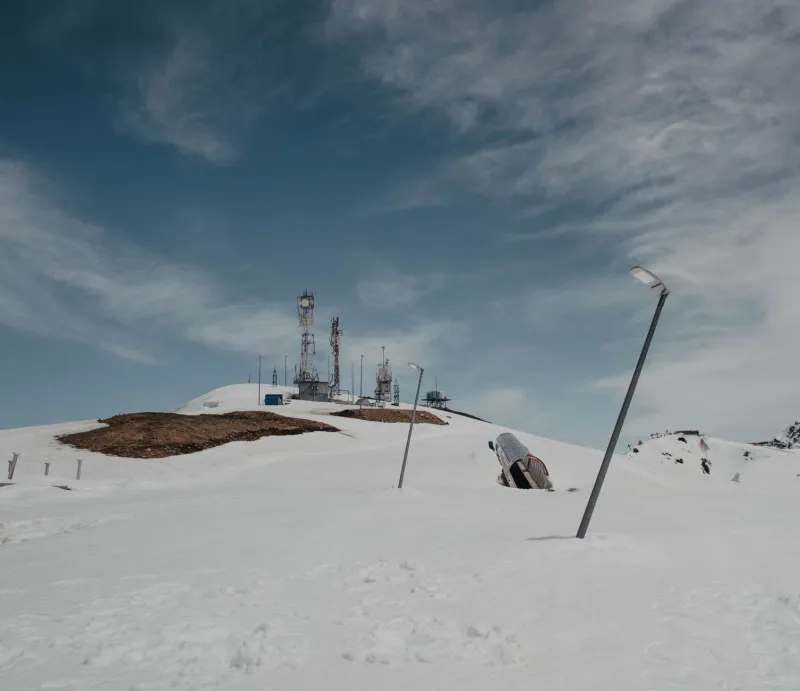
Radio repeater infrastructure is the backbone of field communications for most Montana law enforcement agencies, and it is also among the most vulnerable components in the system. Many repeater sites sit on exposed ridgelines or mountain peaks, precisely because elevation extends their range. Those same positions expose them to the full force of Montana's weather.
Icing events are particularly destructive. When freezing rain accumulates on antenna arrays, signal quality degrades before the system fails entirely. Solar panels that power remote sites in summer become ineffective under snow cover. Propane backup generators require periodic servicing that becomes logistically difficult — or impossible — when access roads are closed.
Several county sheriff's offices in western and south-central Montana have documented instances in which repeater failures during winter storms created communication gaps lasting hours. During those windows, officers relied on cellular networks where coverage existed, or on direct radio contact with neighboring agencies operating on different frequencies — a workaround that functions only when those neighbors are within range.
What Departments Are Doing
The response from Montana's law enforcement community has been deliberate, if constrained by the budget realities that define public safety funding across the state.
Some agencies have pursued redundancy as a primary strategy. This means installing secondary repeater paths that route communications through alternative sites when the primary link fails. The investment is significant, but administrators who have managed through major communication outages describe it as essential rather than optional.
Others have turned to satellite-based communication tools to fill gaps that terrestrial infrastructure cannot reliably cover. Devices that operate independently of cellular and radio networks have been issued to officers working in high-risk remote areas, providing a last-resort communication channel when all other options are unavailable.
On the dispatch side, several regional centers have formalized mutual aid agreements that allow call volume and supervisory functions to transfer to a partner center if local operations are compromised. These arrangements were tested during significant flooding events in recent years, when at least one dispatch center in a river corridor community was forced to relocate operations temporarily. The transition, while disruptive, functioned because the protocols had been rehearsed.
Public safety answering points — the technical designation for 911 centers — have also invested in generator capacity and fuel storage sufficient to sustain operations through extended outages. The standard of maintaining 72 hours of backup power has become a baseline expectation, though not every facility in the state has yet reached that threshold.
Training for Degraded Conditions
Equipment upgrades address only part of the problem. The human dimension — how dispatchers and officers behave when systems fail — is equally critical.
Some agencies have incorporated degraded-communications scenarios into their training cycles, simulating conditions in which radio contact is intermittent or unavailable. Officers practice pre-planned check-in schedules, predetermined fallback positions, and manual logging procedures that do not depend on digital systems. The discipline required to maintain those habits under the stress of an active incident is not instinctive; it must be developed through repetition.
Dispatchers, for their part, are trained to manage caller anxiety during extended response delays caused by weather — a skill that requires both composure and precise language. Telling a caller in a genuine emergency that help is on the way but roads are compromised requires honesty without inducing panic, a balance that experienced dispatchers describe as one of the more demanding aspects of working weather emergencies.
The Broader Accountability Question
For Montana residents, the implications of weather-disrupted emergency services extend beyond inconvenience. In a state where the distance between a caller and the nearest officer can be measured in tens of miles rather than city blocks, any additional delay created by failed communications or impassable roads can determine outcomes.
Public safety administrators are candid about the gap between current capabilities and an ideal system. Fully redundant communications infrastructure across every corner of Montana would require investment that current funding structures do not support. The practical result is a system that performs well under normal conditions and degrades in ways that vary by location and severity when conditions are not normal.
The departments making the most measurable progress are those that have moved beyond reactive repairs — fixing what breaks after the storm — toward systematic vulnerability assessments conducted before severe weather arrives. Identifying which repeater sites are most exposed, which roads present the highest flood risk to response corridors, and which staffing patterns leave dispatch centers most vulnerable during extended emergencies allows agencies to allocate limited resources with greater precision.
Montana's winters are not going to become more forgiving. The agencies that serve this state's residents understand that keeping the lights on inside a dispatch center — metaphorically and literally — is itself a form of public safety work, one that begins long before the first snowflake falls.